

In skincare, the instinct to do more often works against the very results we chase. The cautionary tale of the 'Love Island face', a look defined by overdone cosmetic enhancement, is one classic example that shows that over-treatment often backfires. Facials sit at the restorative end of that spectrum, yet the same truth applies: more does not always mean better.
So, how often should you get a facial to see visible results? There is no one-size-fits-all answer. It depends on your skin type, the facial you choose, and the transformation you are working toward. A frequency that suits oily, congestion-prone skin can overwhelm sensitive skin that flushes or stings easily.
Where does your skin fall?
Defining the Professional Facial Experience
A professional facial is a sequence of steps, each one preparing the skin for the next. A session typically begins with deep cleansing to lift away the day's residue, followed by warm steam that softens the pores and helps them release. An extraction then clears what has settled inside them, while massage stimulates circulation and helps the face relax.
After that, high-efficacy actives do the real work. Concentrated serums, dermatologist-grade formulations, and facial masks deliver ingredients at strengths far beyond everyday skincare. It is here that science and indulgence meet, giving you visible results within a calm, sensorial experience.
Skincare at home still matters, keeping your skin in good condition between visits. Even so, no daily routine can match the depth of professional extraction or the strength of clinical-grade actives.
The Physiological Impact of Regular Treatments
Does a facial really make a difference, or is it simply an hour of indulgence?
In truth, it is both.
Beyond the immediate glow, regular sessions support the skin's natural processes. Massage encourages circulation and lymphatic flow, helping the complexion look brighter and less puffy, while professional exfoliation and extraction clear congestion and speed up the natural shedding of dead cells.
Compounded over months, these effects may translate into smoother texture, even tone, and a luminosity that isolated sessions cannot sustain.
The keyword is regular.
Skin responds to consistency far more than to intensity, which is why how often you go matters as much as what you do.
Calibrating Frequency to Your Skin Profile
If consistency matters most, your skin type decides the interval between sessions. The skin renews itself on a biological timeline, and the most effective frequency works with that cycle, not against it.
Oily or Congestion-Prone Skin
Skin that produces excess sebum tends to respond well to sessions every three to four weeks. At this cadence, a specialist can manage sebum production and clear debris before it settles into the pores and hardens into congestion. Leave it longer, and blackheads and breakouts often return, undoing the clarity from your previous visit.
Normal, Combination, and Mature Skin
Balanced and maturing skin suits an interval of four to six weeks, which matches the skin's renewal cycle. That cycle takes roughly 28 days in younger skin and lengthens to between 40 and 60 days with age. Spacing your sessions this way allows new cells to surface and supports the collagen that keeps skin firm and luminous.
Reactive and Sensitive Skin
Sensitive skin calls for a more conservative approach, usually every six to eight weeks. A longer interval protects the skin barrier, giving it time to recover fully between sessions and avoiding the redness that over-stimulation can cause. With reactive skin, less really is more.
Specialised and Corrective Modalities
More aggressive facials require longer intervals. For example, superficial chemical peels are usually spaced two to four weeks apart, while medium-depth peels may be done only every few months to let the skin heal completely. Light-based and resurfacing facials are often done over several sessions, with weeks in between.
What Are the Different Types of Facials
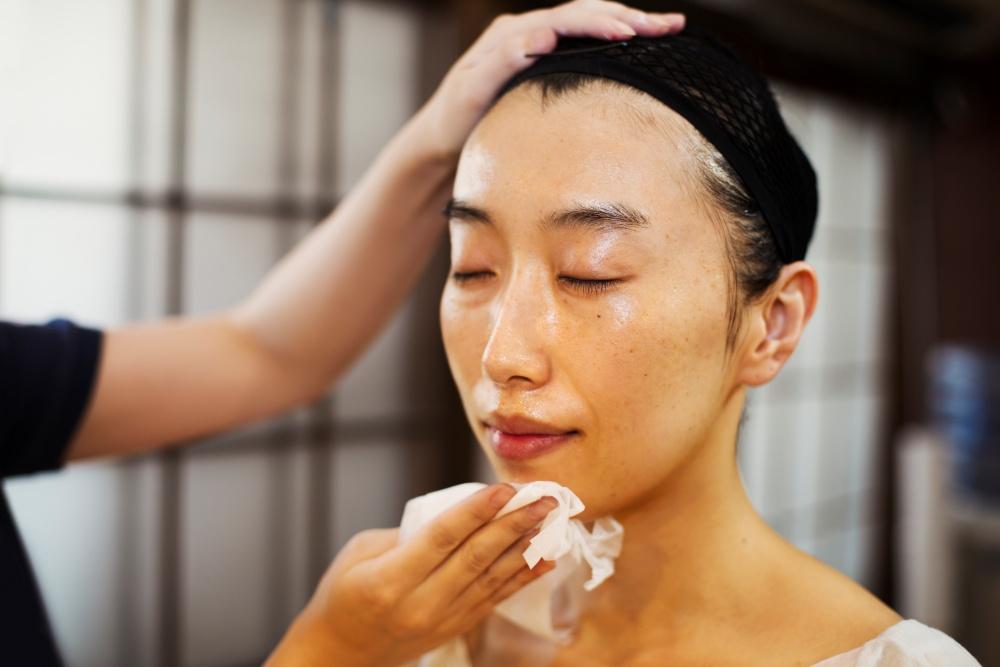
Which facial is right for you? Each type serves a different purpose.
1. Deep Pore Cleansing and Extraction
A deep pore cleansing facial focuses on the manual and technical removal of impurities to clarify the complexion and refine the skin surface.
At Amber Beila, this philosophy runs through options such as our Deep Pore Cleansing Facial and the Aqua Peel Facial, a pore cleansing facial that pairs purification with hydration to leave skin clarified rather than stripped.
2. Chemical Resurfacing
Chemical resurfacing uses professional-strength acids, such as AHAs and BHAs, to dissolve the bonds between dead surface cells. Done as a course of sessions, it smooths texture, evens out pigmentation, and restores a clear, luminous tone over time.
3. Microdermabrasion and Physical Exfoliation
Microdermabrasion works mechanically, buffing away the outermost layer of dull, dead cells. It suits rough texture and lacklustre skin, leaving the surface smoother and more capable of absorbing the actives applied afterwards.
4. Microcurrent and Muscle Stimulation
Microcurrent uses low-level electrical currents that work with the facial muscles to support contour and a visibly lifted appearance after a session. At Amber Beila, the Triple V Lift and Signature Non-surgical Derma Face Lift use this approach for those who want more definition without downtime.
5. LED and Light-Based Therapy
Light-based therapy uses specific wavelengths of light to address concerns from blemish-prone skin to the visible signs of environmental ageing.
Indicators That Your Skin Requires Professional Attention
How do you know when your skin needs attention sooner than usual? Your complexion gives clear signals. A session is often well timed when you notice:
- Persistent dullness that your daily routine no longer lifts
- Localised congestion or recurring blackheads that resist home care
- A sudden change in texture, or pores that look more prominent
Environmental pressures play a part, too. Pollution, air-conditioning, and seasonal change can speed up these signs and bring your next appointment forward.
Essential Principles for Sustained Skin Success
Whatever your routine, a few principles separate skin that improves from a glow-up plateau.
- Avoid over-frequency: Sessions too close together, or too aggressive, can compromise the skin's protective barrier, trading a short-term result for long-term sensitivity.
- Prioritise regularity: A steady, moderate frequency gives better results than occasional, high-intensity sessions.
- Seek specialist analysis: A professional assessment tailors your appointments to your skin's changing needs across seasons and life stages.
- Support results at home: A disciplined daily routine preserves the gains made during professional sessions.
Embark on Your Journey to Radiant Skin
The best way to find your ideal frequency is a professional skin assessment. An expert can assess what your skin needs and set the right interval for it.
To find yours, book a consultation with Amber Beila. Our team offers a deep pore cleansing facial and other pore cleansing facial options, each tailored to your skin profile and goals, so your path to a healthy, luminous complexion is one you can actually maintain.