
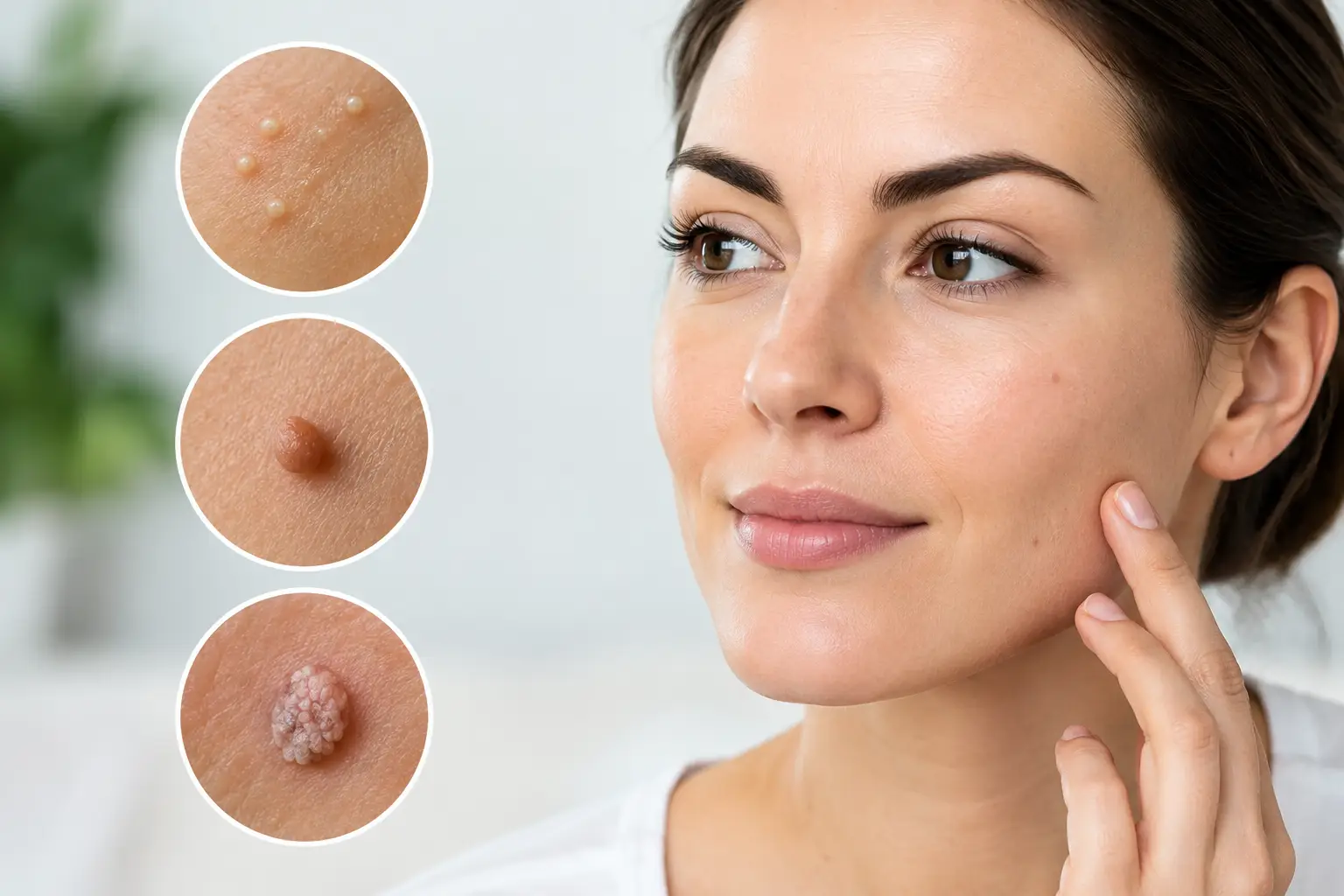
Noticed tiny white bumps around your eyes, small flesh-coloured growths on your neck, or rough bumps on your skin? These could be milia seeds, skin tags or warts.
Although these skin concerns may look similar, they have different causes, characteristics and treatment approaches. Understanding the difference between milia seeds, skin tags and warts can help you identify potential skin concerns, avoid unsuitable treatments and make better skincare decisions.
In Singapore's hot and humid climate, concerns such as clogged pores, oily skin and uneven skin texture are common. However, not every bump is caused by excess oil or congestion.
This guide explains how milia seeds, skin tags and warts differ, what causes them, whether they can be removed and when to seek professional advice.
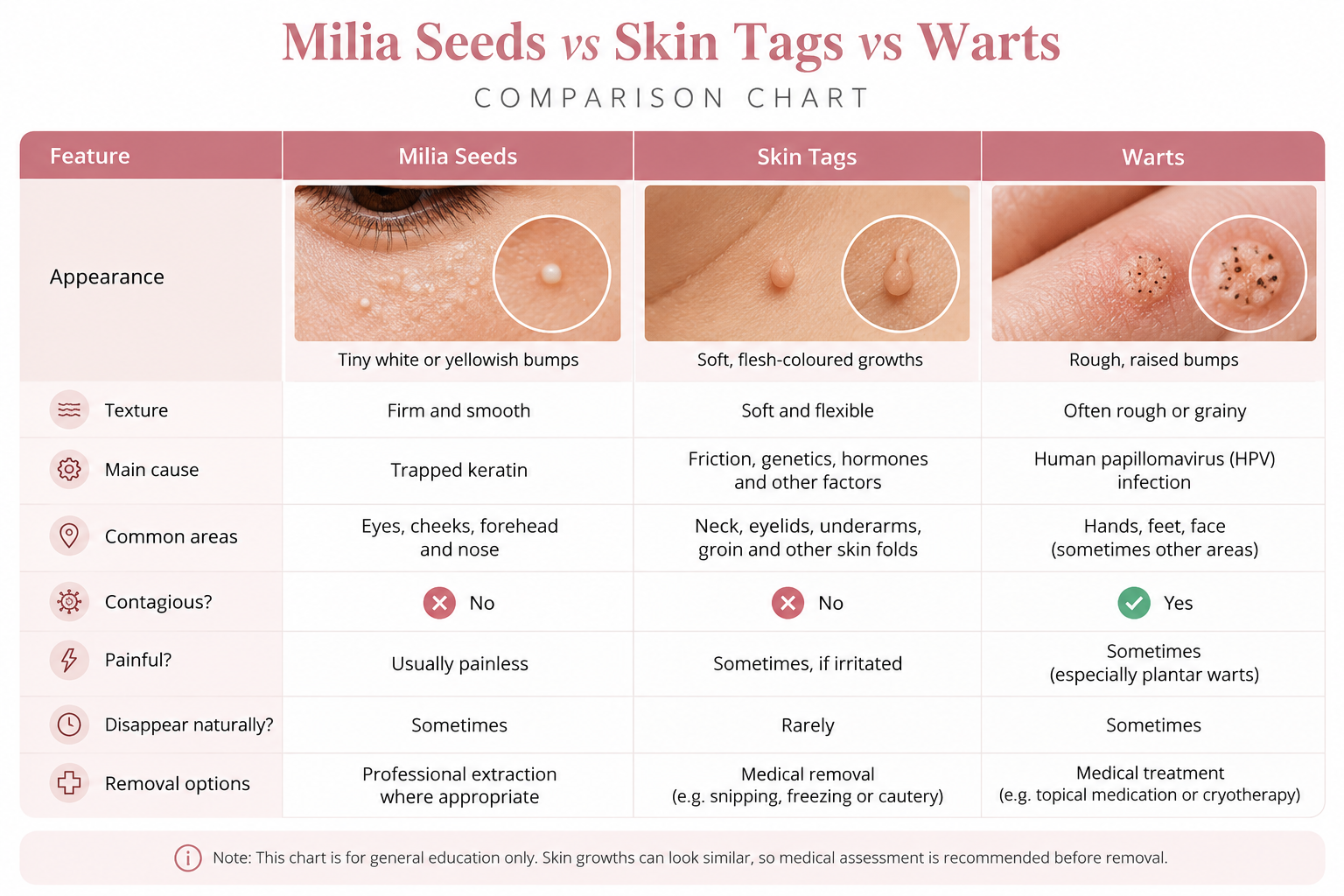
Milia Seeds vs Skin Tags vs Warts: What's the Difference?
The main differences between milia seeds, skin tags and warts lie in their appearance, texture, causes and whether they are contagious.
Milia seeds: Tiny, firm, white or yellowish bumps caused by keratin trapped beneath the skin. They are not contagious.
Skin tags: Soft, flesh-coloured or slightly darker skin growths, commonly found around the neck, eyelids and areas of friction. They are not contagious.
Warts: Skin growths caused by the human papillomavirus (HPV). They often have a rough surface and can spread through contact.
While these characteristics offer useful clues, some skin conditions can look alike. An in-person medical assessment is recommended if a growth is unusual, changing or difficult to identify.
1. What Are Milia Seeds and Why Do They Appear?
Milia seeds, medically known as milia, are small, keratin-filled cysts that develop just beneath the skin's surface. They usually appear as tiny white or cream-coloured bumps, particularly around the eyes, cheeks, forehead and nose.
Unlike acne or whiteheads, milia are not caused by the same process of clogged hair follicles and inflammation. They are generally harmless, painless and non-contagious.
What Causes Milia Seeds?
Milia develop when keratin, a natural protein found in the skin, becomes trapped beneath the surface.
Several factors may be associated with their formation:
Trapped keratin: Keratin becomes enclosed beneath the skin rather than shedding normally.
Skin damage: Burns, blistering and certain skin injuries can cause secondary milia during healing.
Sun damage: Long-term UV exposure may contribute to certain forms of milia.
Skin healing processes: Milia may develop following irritation or some skin procedures.
Natural skin processes: Milia can also appear without an identifiable cause.
Rich skincare products are sometimes associated with small facial bumps, but they are not an established cause of every case of milia.
Can Milia Seeds Be Removed?
Some milia disappear naturally over time, while others remain persistent.
Depending on the type and location, a dermatologist or appropriately qualified professional may recommend a suitable procedure after confirming the condition.
Avoid squeezing, scratching or attempting to puncture milia at home, especially around the delicate eye area. Incorrect removal can cause irritation, pigmentation, infection or scarring.
Maintaining a gentle skincare routine and protecting your skin from UV exposure can support overall skin health.
For additional skincare guidance, read our article on sunscreen and everyday skin protection.
2. What Are Skin Tags and What Causes Them?
Skin tags, also called acrochordons, are small, benign skin growths that commonly develop in areas where the skin experiences repeated friction.
Unlike milia, which feel firm beneath the skin, skin tags are usually soft, flexible and may hang from the skin on a narrow stalk.
Skin tags commonly appear around the:
Neck
Eyelids
Underarms
Groin
Under the breasts
Other skin folds
They may be flesh-coloured or slightly darker than the surrounding skin.
What Causes Skin Tags?
The exact cause of skin tags is not fully understood, but several factors are associated with their development.
Skin Friction
Repeated rubbing between skin surfaces or against clothing and jewellery may contribute to skin tag formation.
Genetics
People with a family history of skin tags may be more likely to develop them.
Hormonal Changes
Skin tags may become more common during hormonal changes, including pregnancy.
Ageing
Skin tags occur more frequently in adults and become increasingly common with age.
Metabolic Factors
Skin tags have also been associated with insulin resistance and certain metabolic conditions.
Importantly, skin tags are not caused by poor hygiene and are not contagious.
Do Skin Tags Need to Be Removed?
Most skin tags are harmless and do not require removal.
However, some people choose to have them removed when they become irritated by clothing, jewellery or shaving, or when they affect their appearance.
A doctor or dermatologist may recommend removal methods such as surgical snipping, freezing or electrosurgery, depending on the location and characteristics of the growth.
Because other skin conditions can resemble skin tags, proper identification is essential before removal. Avoid using scissors, acids, burning tools or home removal kits. These methods can damage healthy skin and increase the risk of bleeding, infection and scarring.
3. What Are Warts and Are They Contagious?
Warts are skin growths caused by certain types of the human papillomavirus (HPV).
Unlike milia and skin tags, warts are contagious and can spread through direct skin contact or contact with contaminated objects and surfaces.
They often have a rough, grainy or uneven texture, although their appearance varies depending on the type.
Some warts contain tiny black dots, which are small blood vessels rather than dirt or roots.
Common Types of Warts
Common Warts
These usually develop on the hands, fingers and knees. They often have a firm, rough surface.
Plantar Warts
Plantar warts grow on the soles of the feet and may cause discomfort when standing or walking.
Flat Warts
These are smaller, smoother and flatter than typical warts. They may appear on the face, hands or legs.
Filiform Warts
These narrow, projecting growths commonly develop around the face, eyelids or neck.
Can Warts Disappear Without Treatment?
Some warts disappear naturally when the immune system clears the infection. However, this can take months or even years.
Because warts are caused by HPV, they may spread to other areas of the body or to other people.
Medical treatment options can include topical medication, cryotherapy or other procedures recommended by a dermatologist.
If you suspect a wart, seek medical advice before attempting removal, particularly if the growth is on the face or near the eyes.
Warts should not be extracted or exfoliated during a regular facial treatment.
4. Milia Seeds vs Skin Tags vs Warts: Comparison Table
Understanding the differences between these skin concerns can help you recognise their common characteristics.
Although milia seeds, skin tags and warts have recognisable characteristics, an unfamiliar bump should not be diagnosed from its appearance alone.
5. How to Identify Different Types of Skin Bumps
Not every bump on your skin is acne, milia or a skin tag.
Understanding the appearance and location of a growth can provide useful clues.
Tiny White Bumps Around the Eyes or Cheeks
Small, firm white bumps that sit beneath the skin may be milia. They usually do not have a visible opening and cannot be extracted like ordinary blackheads.
Soft, Hanging Bumps Around the Neck
Soft growths that protrude from the skin, especially around areas of friction, may be skin tags. They are often painless unless irritated by clothing or jewellery.
Rough Bumps on the Hands or Feet
Rough or uneven growths, particularly those containing tiny dark dots, may be warts. However, not all warts have the same appearance.
Small Bumps That Resemble Whiteheads
Some facial bumps may actually be caused by clogged pores, excess sebum or acne-related congestion rather than milia.
Clogged pores commonly develop when oil and dead skin cells accumulate within hair follicles, resulting in blackheads, whiteheads or uneven skin texture.
Understanding the causes of clogged pores and suitable treatments can help you recognise the difference between ordinary pore congestion and other skin concerns.
If a growth is persistent, changing or difficult to identify, consult a doctor or dermatologist before considering removal.
6. Can Facial Treatments Help With Milia Seeds or Skin Texture?
Not every small facial bump is milia. Some may be related to clogged pores, whiteheads, excess oil or uneven skin texture.
For these concerns, a professionally customised facial may help improve skin clarity and texture.
At Amber Beila Singapore, our facial treatments focus on personalised skincare based on individual skin conditions.
Deep Pore Cleansing Facial for Congested Skin
Our Deep Pore Cleansing Facial in Singapore is designed to address clogged pores, surface impurities, excess oil and uneven skin texture.
The treatment combines carefully selected cleansing, exfoliation and extraction techniques to support clearer, smoother-looking skin.
It may be suitable for people experiencing:
Clogged or congested pores
Blackheads and whiteheads
Excess oil and surface buildup
Rough or uneven skin texture
Acne-prone skin requiring pore-focused care
However, Deep Pore Cleansing is not a medical treatment for warts, skin tags or unidentified skin growths, and it should not be presented as a guaranteed method of milia removal.
Choosing the Right Facial for Your Skin
Different skin types and conditions require different skincare approaches.
For example, oily and congestion-prone skin may benefit from pore-focused cleansing, while dehydrated or sensitive skin may need gentler, hydration-focused care.
Discover the benefits of different facial treatments and how to select a suitable option for your skin concerns.
A personalised skincare consultation can also help determine whether a facial is appropriate or whether medical assessment is recommended.
7. How to Care for Skin Prone to Tiny Bumps
While milia, skin tags and warts cannot all be prevented through skincare, a consistent routine can help maintain healthier-looking skin and reduce certain forms of pore congestion.
Cleanse Your Skin Gently
Regular cleansing removes makeup, excess oil, sweat and daily impurities.
Choose a cleanser suitable for your skin type and avoid harsh washing that leaves the skin feeling tight or irritated.
Avoid Over-Exfoliating
Exfoliation can help remove dead skin cells and improve the appearance of rough skin texture.
However, excessive exfoliation may compromise the skin barrier, leading to sensitivity, dryness and irritation.
Choose Suitable Skincare Products
Select moisturisers and serums according to your skin's needs.
If your skin is prone to congestion, lighter non-comedogenic formulations may be preferable to heavy products that leave excessive residue.
Apply Sunscreen Daily
Daily broad-spectrum sunscreen helps protect the skin against UV damage and premature ageing.
This is particularly relevant in Singapore, where UV exposure remains an everyday concern.
Avoid Picking or Squeezing Skin Bumps
Attempting to remove unfamiliar bumps yourself can cause inflammation, pigmentation, infection or scarring. Persistent milia and other unidentified growths should be assessed before removal.
Consider Professional Facial Maintenance
For skin prone to blackheads, clogged pores and uneven texture, appropriately selected professional facials can complement a consistent home skincare routine.
The ideal frequency depends on your skin type, sensitivity and treatment goals.
Learn more about how often you should get a facial and how regular skincare maintenance may support skin clarity.
8. When Should You See a Dermatologist?
Although milia and skin tags are usually benign, certain skin changes require medical attention.
Consult a doctor or dermatologist if a growth:
Changes rapidly in size, shape or colour
Bleeds without an obvious injury
Becomes painful or persistently inflamed
Develops into a sore that does not heal
Appears on or near the eyelid
Spreads rapidly or repeatedly returns
Cannot be confidently identified
A medical professional can determine whether a growth is harmless or requires further investigation.
Avoid attempting to remove an unidentified lesion through facials, home tools or over-the-counter treatments without appropriate advice.
Personalised Skincare at Amber Beila Singapore
Understanding your skin is the first step towards choosing the right skincare approach.
Whether you are experiencing clogged pores, uneven skin texture, excess oil or persistent facial congestion, Amber Beila offers customised facial treatments designed around individual skin needs.
With over 15 years of beauty industry experience, Amber Beila focuses on personalised skincare, professional beauty treatments and honest skincare advice.
Visit us at any of our four Singapore beauty salon locations:
The Heeren: Orchard Road
Delfi Orchard: Orchard Road
One Raffles Place: Raffles Place
Beauty World: Bukit Timah
Discover our latest facial treatment promotions in Singapore or book your personalised skincare consultation to find a treatment suited to your skin concerns.
Healthy-looking skin begins with understanding what your skin truly needs.
Disclaimer: This article is intended for general skincare education and does not constitute medical advice or diagnosis. Amber Beila is a beauty salon, not a medical clinic. If you notice an unidentified, suspicious or changing skin growth, consult a qualified medical professional for diagnosis and treatment.