
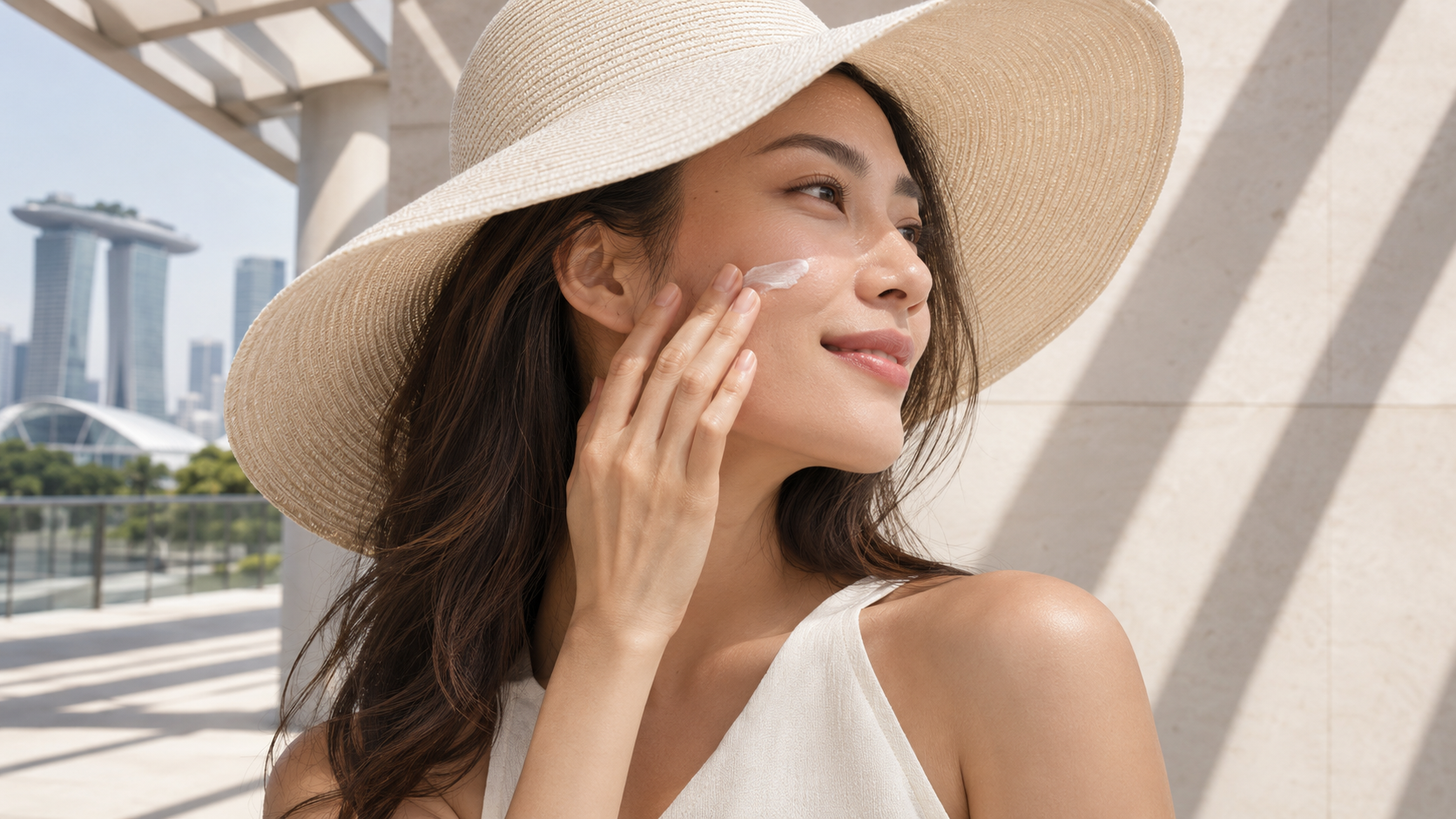
The best way to protect your skin from sun damage is to use broad-spectrum sunscreen with SPF 30 or higher, reapply it regularly when outdoors, and combine it with shade and protective clothing. Daily sun protection helps reduce the risk of sunburn, premature skin ageing, dark spots and skin cancer. In Singapore, sun protection is especially important because ultraviolet (UV) exposure can be high throughout the year. However, sunscreen is only one part of protecting your skin. Understanding UVA and UVB rays, choosing a suitable SPF and maintaining a gentle skincare routine can help keep your skin protected and comfortable. This guide explains everything you need to know about sunscreen, skin protection and daily skincare in Singapore. Sun exposure can affect both the appearance and health of your skin. Ultraviolet radiation from the sun can damage skin cells and contribute to premature ageing, pigmentation changes, sunburn and skin cancer. Some effects develop gradually and may not be immediately visible. Common signs associated with cumulative sun exposure include: Uneven skin tone Dark spots and pigmentation Fine lines and wrinkles Loss of skin elasticity Rough-looking skin texture Sunburn and redness Although skincare products and cosmetic treatments may improve certain visible concerns, preventing unnecessary UV exposure remains one of the most important parts of maintaining healthy skin. UVA and UVB are two types of ultraviolet radiation that affect the skin. Both can contribute to skin damage, but their effects differ. UVA rays can penetrate more deeply into the skin than UVB rays. They contribute to changes associated with photoageing, including fine lines, wrinkles, pigmentation and reduced skin elasticity. UVA can also pass through ordinary window glass, making it relevant for people who spend extended periods near sunny windows. UVB rays primarily affect the outer layers of the skin. They are a major cause of sunburn and can directly damage DNA in skin cells. Both UVA and UVB contribute to skin cancer risk. The key takeaway: Choose broad-spectrum sunscreen because it protects against both UVA and UVB radiation. SPF stands for Sun Protection Factor. It indicates the level of protection a sunscreen provides against UVB-related sunburn when applied correctly. Higher SPF numbers provide greater UVB protection, but the improvement becomes smaller as SPF increases. These figures describe protection under testing conditions. Actual protection depends on how much sunscreen you apply, how evenly it is distributed and whether you reapply it. No sunscreen provides complete protection against ultraviolet radiation. Both SPF 30 and SPF 50 can provide effective sun protection when used correctly. For everyday use, broad-spectrum SPF 30 or higher is generally recommended. SPF 50 offers additional UVB protection and may be preferable for people spending extended periods outdoors or who are particularly concerned about sun exposure. However, applying enough sunscreen and reapplying it appropriately are more important than relying on a high SPF number alone. Look for broad-spectrum protection and water resistance when choosing sunscreen. You may notice sunscreen products labelled PA+, PA++, PA+++ or PA++++. The PA system indicates the level of UVA protection based on testing. In general, more plus signs indicate higher UVA protection within this rating system. For example: PA+ indicates some UVA protection. PA++ indicates moderate UVA protection. PA+++ indicates higher UVA protection. PA++++ indicates very high UVA protection. SPF and PA measure different aspects of sun protection. SPF primarily relates to UVB protection, while PA focuses on UVA protection. When shopping for sunscreen in Singapore, consider both the SPF rating and UVA protection information. There are two main categories of sunscreen based on their UV-filter ingredients. Mineral sunscreens use ingredients such as zinc oxide and titanium dioxide. These ingredients protect against UV radiation through a combination of absorption and reflection. Mineral formulations may be preferred by some people with sensitive skin, although tolerance varies. Certain products can leave a visible white cast, particularly on deeper skin tones. Chemical sunscreens use organic UV-filter ingredients that absorb ultraviolet radiation. They are available in a variety of textures, including lightweight lotions, gels and fluids. Some formulations may feel more comfortable under makeup or in humid conditions. However, individual ingredients and formulations may irritate sensitive skin. Neither mineral nor chemical sunscreen is automatically better for everyone. The most suitable sunscreen is one that: Provides broad-spectrum protection Has SPF 30 or higher Suits your skin type Feels comfortable enough for regular use Offers water resistance when needed Consistency matters more than choosing sunscreen based on its category alone. Applying too little sunscreen can significantly reduce the protection you receive. As a practical guide, adults generally need about one teaspoon of sunscreen for the face, according to Singapore HealthHub guidance. Apply sunscreen evenly to exposed areas, including: Face Ears Neck Upper chest Arms and hands Other uncovered skin Do not forget areas that are easy to overlook, such as the back of your neck and tops of your ears. Apply sunscreen approximately 15 minutes before heading outdoors, following your product's instructions. When outdoors, reapply sunscreen approximately every two hours and after swimming, heavy sweating or towel-drying. Even water-resistant sunscreen does not provide unlimited protection. Sweating, swimming, rubbing and ordinary daily activities can reduce the amount of sunscreen remaining on your skin. After approximately two hours of outdoor exposure After swimming After significant sweating After towel-drying Whenever sunscreen has been rubbed or washed off If you spend most of your day indoors away from direct sunlight, your reapplication needs may differ. However, if you're frequently moving between indoor and outdoor environments in Singapore, keeping sunscreen available for reapplication is a useful habit. Yes. Cloud cover does not completely block ultraviolet radiation. UV rays can still reach the skin when the weather looks overcast or when the sun is not clearly visible. This means sunburn and cumulative UV damage remain possible on cloudy days. Rather than using sunshine as the only indicator, consider the UV Index and your expected outdoor exposure. Daily sunscreen is a practical habit in Singapore's tropical climate. Whether you need sunscreen indoors depends largely on your exposure to sunlight. Ordinary window glass blocks much UVB radiation but can allow UVA radiation to pass through. If you sit close to a sunny window for extended periods, UVA exposure may be relevant. However, people working away from windows with minimal daylight exposure generally receive far less UV exposure than those spending time outdoors. Consider your actual environment when deciding how often to reapply sunscreen indoors. Sunscreen is important, but it should not be your only method of sun protection. A more complete approach includes: Limit unnecessary direct sun exposure, particularly when UV levels are high. Use sheltered walkways, shaded seating areas or umbrellas when practical. Long sleeves, tightly woven fabrics and clothing with an ultraviolet protection factor (UPF) can help reduce exposure. A wide-brimmed hat provides additional shade for your face, ears and neck. UV-protective sunglasses help protect your eyes and the surrounding area. The UV Index indicates the strength of ultraviolet radiation. Higher readings mean greater potential for skin and eye damage. In Singapore, checking daily UV conditions can help you plan outdoor activities more safely. Gentle cleansing and moisturising help maintain skin comfort and barrier function. However, moisturisers and hydrating serums do not replace sunscreen or provide meaningful UV protection unless specifically formulated and tested for that purpose. UV exposure can stimulate melanin production, contributing to tanning and certain types of hyperpigmentation. People who experience dark spots, post-inflammatory pigmentation or melasma may find that sunlight worsens the appearance of uneven skin tone. Consistent sun protection is therefore an important part of managing pigmentation concerns. For some individuals, tinted broad-spectrum sunscreen containing iron oxides may provide additional protection against visible light that can contribute to pigmentation. However, persistent pigmentation concerns may require professional medical assessment. Cosmetic facials should not be considered a substitute for appropriate dermatological treatment. Sun protection is especially important after facial treatments that involve exfoliation or other potentially irritating steps. Depending on the procedure, your skin may temporarily feel more sensitive. Appropriate aftercare can help maintain skin comfort while reducing unnecessary irritation. Use suitable SPF 30 or higher sunscreen and limit unnecessary direct sun exposure. Follow any additional instructions given by your treatment provider. Avoid introducing multiple new active ingredients immediately after a facial. Depending on the treatment, your practitioner may recommend temporarily avoiding retinoids, exfoliating acids or scrubs. Use an appropriate moisturiser to help reduce dryness and maintain skin comfort. Ingredients such as glycerin, hyaluronic acid and ceramides may support moisture retention and barrier care. Over-exfoliating after a facial can increase irritation. Allow your skin time to recover according to the intensity of your treatment. Not all facial treatments have the same aftercare requirements. Always follow the guidance provided for your specific treatment. Some professional facials may improve the cosmetic appearance of concerns such as dryness, rough texture and dull-looking skin. Hydrating treatments may help skin feel more comfortable, while suitable exfoliation may improve surface smoothness. However, these treatments cannot reverse all UV-related damage. Facials do not replace sunscreen, nor can they eliminate skin cancer risk. Deep pigmentation, suspicious skin lesions and significant sun damage should be assessed by a dermatologist. At Amber Beila, we provide facial treatments for different cosmetic concerns, including hydration, congestion and uneven-looking skin texture. Explore our different types of facial treatments to understand which options may suit your skin. Even a good sunscreen may offer less protection when used incorrectly. Watch out for these common mistakes: 1. Applying too little sunscreen Using a thin layer may provide less protection than the SPF shown on the label. 2. Forgetting to reapply Sunscreen needs reapplication during prolonged outdoor exposure. 3. Applying sunscreen only on sunny days Cloudy weather does not eliminate ultraviolet radiation. 4. Missing exposed areas The ears, neck, hands and other uncovered areas need protection too. 5. Assuming SPF 50 provides complete protection No sunscreen blocks all UV radiation. 6. Relying on makeup alone Makeup with SPF may not provide the advertised protection if applied too thinly. 7. Skipping shade and protective clothing Sunscreen should complement other sun-protective habits. Broad-spectrum SPF 30 or higher is generally recommended. SPF 50 offers additional UVB protection, but correct application and reapplication are essential regardless of SPF. SPF 30 filters approximately 97% of UVB radiation, while SPF 50 filters approximately 98% under testing conditions. SPF 50 provides additional protection, but neither blocks all UV rays. Daily sunscreen is recommended when you expect daylight UV exposure, particularly outdoors. Singapore experiences UV exposure throughout the year, including on cloudy days. If you're away from direct sunlight and windows throughout the day, UV exposure is generally much lower. However, extended time beside sunny windows may expose you to UVA radiation. Reapply approximately every two hours when outdoors, and after swimming, sweating or towel-drying. Follow the product's specific water-resistance instructions. Some people with sensitive skin tolerate mineral sunscreens well, but not every formulation will suit everyone. Fragrance, preservatives and other ingredients can also influence irritation. Regular sun protection helps reduce UV-related premature skin ageing, including the development of some wrinkles and pigmentation changes. It cannot stop all biological ageing. For most gentle facials, suitable sunscreen remains important. However, certain intensive procedures may require specific aftercare instructions. Follow your treatment provider's advice. No. Moisturiser does not provide tested UV protection unless it contains sunscreen filters and is labelled with an appropriate SPF and broad-spectrum rating. Consistent UV protection can help reduce sun-related pigmentation and prevent some dark spots from worsening. Depending on the concern, additional treatment may be required. Healthy-looking skin begins with consistent protection. Using suitable sunscreen, limiting excessive UV exposure and maintaining a gentle skincare routine can help support skin health over time. Professional facial treatments may provide additional cosmetic care, but everyday sun protection remains essential. At Amber Beila, we offer personalised facial treatments for different skin concerns, including dehydration, congestion and uneven-looking skin texture. Our team provides honest advice to help you find suitable facial care based on your skin's current needs. Visit Amber Beila at: The Heeren, Orchard Road Delfi Orchard One Raffles Place Beauty World Looking for a facial treatment that complements your skincare routine? Explore Amber Beila Facial Treatments Disclaimer: This article provides general skincare information and does not replace medical advice. Consult a qualified healthcare professional for suspicious skin changes, persistent pigmentation or other medical concerns.Why Is Sun Protection Important for Healthy Skin?
What Is the Difference Between UVA and UVB Rays?
UVA Rays: Associated with Skin Ageing
UVB Rays: Associated with Sunburn
What Does SPF Mean in Sunscreen?
SPF 30 vs SPF 50: What's the Difference?
Is SPF 30 or SPF 50 Better for Singapore?
What Is PA++++ in Sunscreen?
What Are the Different Types of Sunscreen?
1. Mineral Sunscreen
2. Chemical Sunscreen
Which Sunscreen Type Is Better?
How Much Sunscreen Should You Apply?
How Often Should You Reapply Sunscreen?
When should you reapply?
Do You Need Sunscreen on Cloudy Days in Singapore?
Do You Need Sunscreen Indoors?
Is Sunscreen Enough to Protect Your Skin?
1. Seek Shade
2. Wear Protective Clothing
3. Protect Your Face and Eyes
4. Check the UV Index
5. Maintain Consistent Skincare
How Does Sun Exposure Affect Pigmentation?
How Should You Protect Your Skin After a Facial?
1. Apply Broad-Spectrum Sunscreen
2. Keep Your Skincare Routine Gentle
3. Maintain Skin Hydration
4. Avoid Excessive Exfoliation
5. Follow Individual Aftercare Advice
Can Professional Facials Repair Sun-Damaged Skin?
Common Sunscreen Mistakes to Avoid
Frequently Asked Questions About Sunscreen and Skin Protection
1. What SPF should I use daily in Singapore?
2. Is SPF 50 much better than SPF 30?
3. Do I need sunscreen every day in Singapore?
4. Can I skip sunscreen if I stay indoors?
5. How often should I reapply sunscreen?
6. Is mineral sunscreen better for sensitive skin?
7. Does sunscreen prevent skin ageing?
8. Can I use sunscreen immediately after a facial?
9. Can I use moisturiser instead of sunscreen?
10. Does sunscreen help prevent dark spots?
Protect Your Skin with the Right Daily Routine
Skin Protection 101: Sunscreen, SPF & Daily Skincare in Singapore
TAKE YOUR BEAUTY JOURNEY TO THE NEXT LEVEL. LEARN MORE ABOUT OUR CURATED BEAUTY SERVICES NOW.