
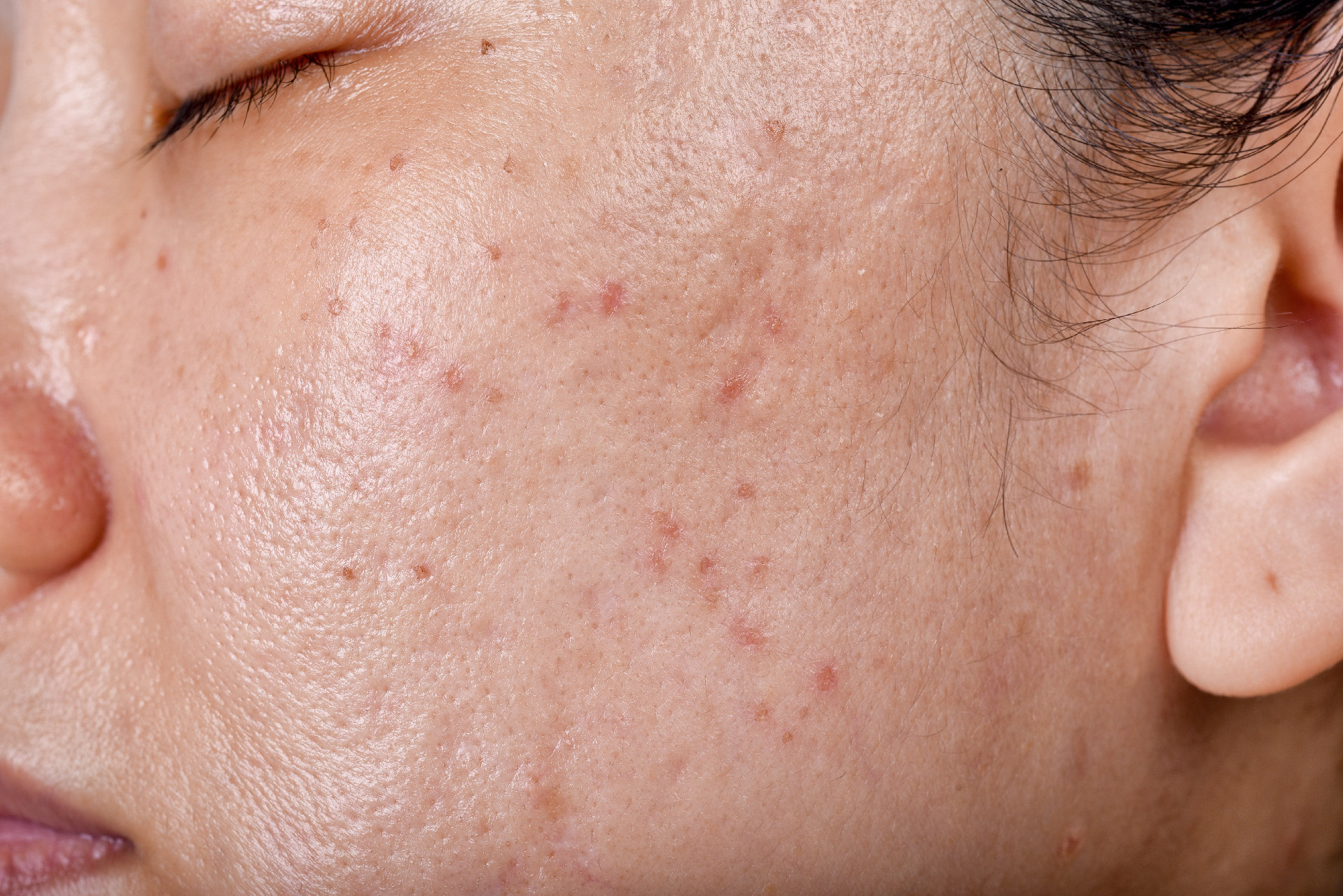
There's no single "best" treatment — the right approach depends on whether you have flat discoloration, deep indentation, or a raised scar. Flat marks respond to brightening facials, hydration, and photo rejuvenation. Indented scars need medical procedures like microneedling or lasers. Raised scars need a doctor's assessment. Most people get the fastest, safest results by combining salon skin support with medical treatment where needed — not by choosing one over the other.
Step 1: Identify Your Scar Type
Not every post-acne mark is a true "scar." Getting this right determines which treatment will actually work.
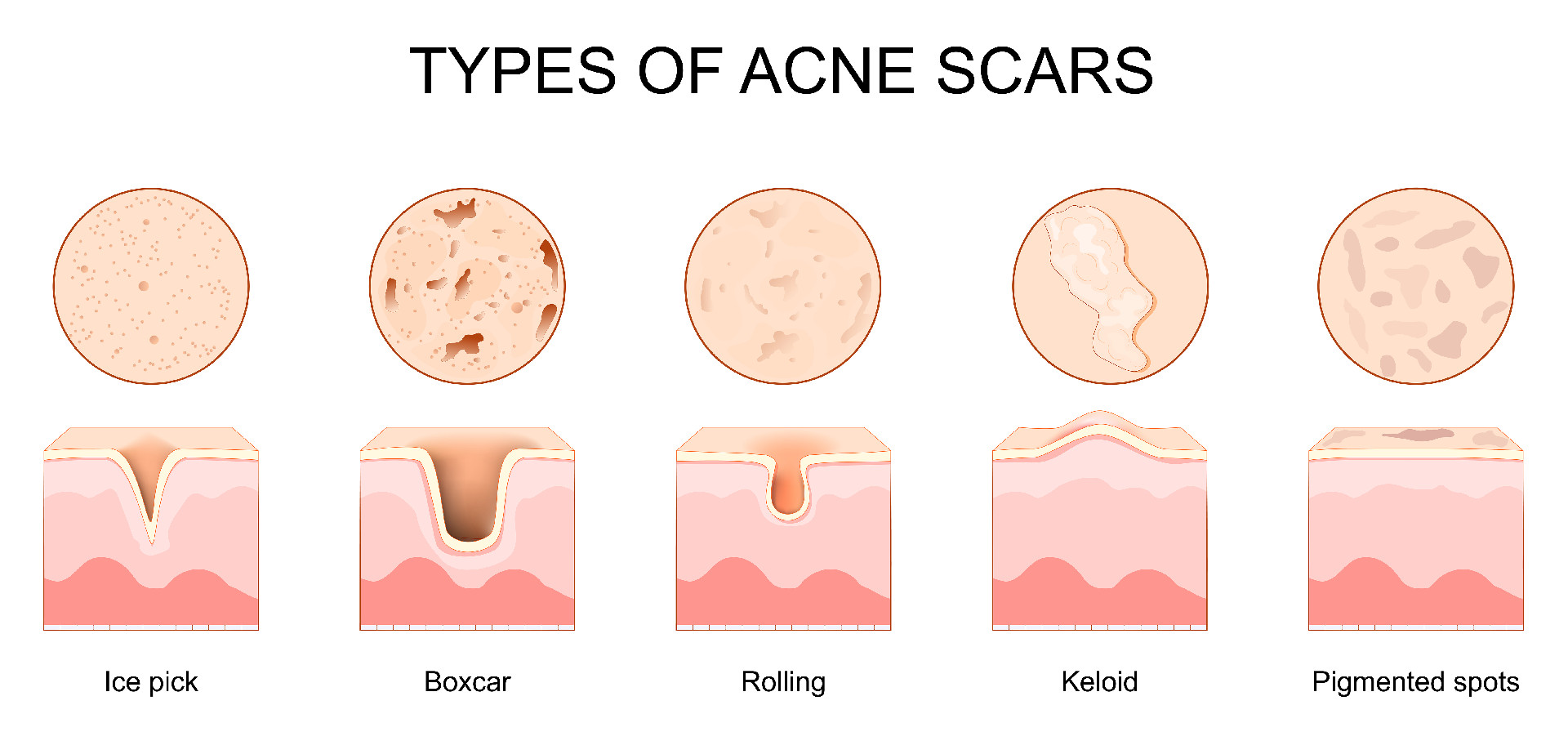
Dark marks (post-inflammatory hyperpigmentation): Brown, gray, or reddish marks where skin structure is still intact. Often fade on their own but can worsen with sun exposure or picking.
Red or pink marks: Lingering inflammation and visible blood vessels. Common on sensitive skin; needs a calming, non-aggressive approach.
Indented scars (ice-pick, boxcar, rolling): Caused by collagen damage from severe acne. Depth and shape determine treatment — usually needs a medical provider.
Raised or keloid scars: Thickened tissue that can grow beyond the original lesion. Always needs doctor assessment before any treatment.
Step 2: Match Treatment to Your Scar Type
Note: No facial can fill a deep indented scar. Salon treatments play a supportive role — improving hydration, texture, and surface congestion around the area — while medical procedures address the structural damage.
Step 3: Set Realistic Expectations
"Scar removal" is a misleading phrase — the realistic goal is scar improvement: softer contrast, more even tone, smoother-looking texture.
Be cautious of "permanent removal" claims, especially for deep scars.
Real improvement is gradual, typically visible over several months, not one session.
Ask for progress photos taken in consistent lighting, not filtered images.
Step 4: Questions to Ask Before Booking
What type of scar or mark do I actually have?
What improvement is realistically achievable for my skin?
How many sessions are likely needed?
Is there downtime, and will there be temporary redness or darkening?
How will you manage my active acne so new marks don't keep forming?
Do you have experience treating my skin tone?
Step 5: Protect Results With Daily Habits
Don't squeeze or pick blemishes — this raises pigmentation and scarring risk.
Wear broad-spectrum sunscreen daily — UV exposure worsens discoloration and undoes treatment progress.
Avoid over-exfoliating or stacking multiple active ingredients, which weakens the skin barrier.
Tell your therapist or doctor if you're using retinoids or acne medication before any procedure.
Salon vs. Doctor: Where to Start
See a salon first if: you have congestion, mild uneven texture, dullness, dehydration, post-acne discoloration, or want to maintain clear skin after acne clears up.
See a doctor if: you have deep indented scars, raised/keloid scars, severe active acne, sudden pigmentation changes, or scarring causing significant distress.
At Amber Beila, treatment plans are built around what your skin actually needs — with honest guidance on when a concern needs medical referral rather than an upsell.