
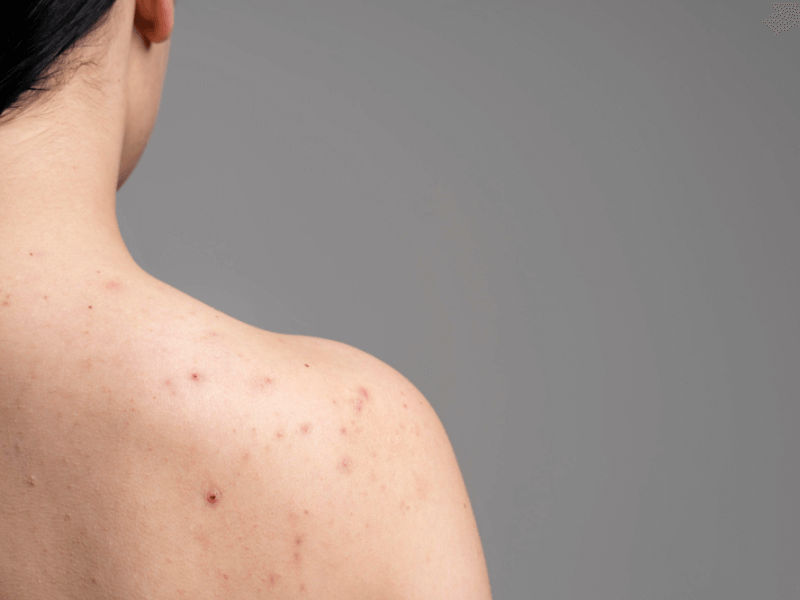
Pimples aren't just a facial concern.
Breakouts can appear on your back, chest, shoulders and other areas of your body, sometimes making everyday activities or clothing choices feel uncomfortable.
If you've noticed recurring body pimples, you're not alone.
Body acne is a common skin concern that can affect teenagers and adults, regardless of gender.
But what causes it? Is it related to sweat, hormones or clogged pores? And why can body acne sometimes be harder to manage than facial acne?
Here's what you should know about body acne, its causes and available treatment options in Singapore.
What Is Body Acne?
Body acne is acne that develops outside the face, commonly affecting the back, chest and shoulders.
Like facial acne, it develops when hair follicles become blocked by excess sebum and dead skin cells.
Bacteria associated with acne and inflammation can contribute to the formation of blemishes.
Common types of acne lesions include:
Blackheads
Whiteheads
Red bumps
Pus-filled pimples
Deeper, painful nodules
Body acne can range from occasional mild breakouts to persistent inflammatory acne.
Not every bump on the body is acne, however. Conditions such as folliculitis and keratosis pilaris can sometimes look similar.
What Causes Body Acne?
Several factors can contribute to breakouts on the body.
1. Excess Oil Production
Sebum is the natural oil produced by the skin.
When excess sebum combines with dead skin cells, it can contribute to blocked follicles.
Areas such as the back and chest contain many sebaceous glands, making them common sites for acne.
2. Hormonal Changes
Hormones influence oil production.
Hormonal fluctuations during puberty, menstrual cycles and other life stages may contribute to acne.
However, having body acne does not automatically mean you have a hormonal imbalance.
3. Sweat and Friction
Sweating does not directly cause acne, but sweat combined with friction, occlusive clothing and prolonged skin irritation may worsen certain breakouts.
This can be relevant for people who:
Exercise frequently
Wear tight sportswear
Carry heavy backpacks
Spend extended periods in sweaty clothing
4. Skincare and Hair Products
Some products may contribute to clogged pores, especially if they contain ingredients that do not suit your skin.
Hair conditioners, styling products and body lotions can sometimes leave residue on the back or shoulders.
If you notice breakouts after introducing a product, review whether it may be contributing.
5. Genetics
A family history of acne may increase your likelihood of developing breakouts.
However, genetics is only one of several contributing factors.
Why Is Body Acne Common in Singapore?
Singapore's hot and humid environment can contribute to sweating and discomfort, particularly during outdoor activities.
When combined with tight clothing, friction or delayed changing after exercise, these conditions may aggravate acne-prone skin.
However, humidity alone does not cause acne.
A consistent routine that includes gentle cleansing and suitable products is generally more useful than aggressive washing or scrubbing.
What Are the Different Types of Body Acne?
Body acne can appear in several forms.
| Type | Appearance |
|---|---|
| Blackheads | Open clogged follicles that appear dark |
| Whiteheads | Closed clogged follicles that appear as small bumps |
| Papules | Small, inflamed red or pink bumps |
| Pustules | Inflamed pimples containing visible pus |
| Nodules | Larger, deeper and often painful lesions |
| Cysts | Deep inflammatory lesions that may be painful and carry scarring risk |
The type and severity of acne affect which treatments may be appropriate.
Persistent nodules, cysts or scarring should be assessed by a dermatologist.
Is Body Acne Different From Facial Acne?
Body acne and facial acne share many underlying causes, but there are practical differences.
| Facial acne | Body acne |
|---|---|
| Common on forehead, cheeks and chin | Common on back, chest and shoulders |
| Usually easier to see and reach | Some areas are difficult to reach |
| May be affected by makeup and facial products | May be affected by clothing friction and body products |
| Facial skin can be more sensitive to some products | Skin characteristics vary across body areas |
| Daily treatment application is generally easier | Applying treatments evenly can be challenging |
The back is particularly difficult to reach, which may make consistent topical treatment less convenient.
This is one reason some individuals consider professional back-acne treatments.
How to Manage Body Acne
There are several practical steps you can take.
1. Cleanse Gently
Wash acne-prone areas with a suitable cleanser.
Avoid harsh scrubbing, which can irritate inflamed skin.
2. Shower After Sweating
After exercise or prolonged sweating, shower when practical and change into clean, dry clothing.
This can help reduce prolonged skin irritation.
3. Wear Breathable Clothing
Choose clothing that reduces unnecessary friction, particularly during exercise.
If tight sportswear worsens your breakouts, consider alternatives.
4. Consider Suitable Acne Ingredients
Certain over-the-counter acne products contain ingredients such as:
Benzoyl peroxide
Salicylic acid
Adapalene, where available and appropriate
These ingredients work differently, and some can cause dryness or irritation.
Follow product instructions and seek advice if you're unsure which option is suitable.
5. Avoid Picking Pimples
Picking or squeezing inflamed acne can worsen irritation and increase the risk of marks or scarring.
6. Review Your Skincare Products
Consider non-comedogenic products where appropriate.
If a particular body lotion, sunscreen or hair product seems associated with breakouts, review your routine.
7. Seek Professional Advice for Persistent Acne
If body acne is painful, widespread, persistent or leaving scars, consult a dermatologist.
Medical treatment may be needed, particularly for moderate-to-severe inflammatory acne.
Can Professional Back Acne Treatments Help?
Professional beauty treatments may be considered for some people experiencing surface congestion, blackheads or mild acne-prone skin.
However, beauty facials do not replace medical treatment for significant inflammatory acne.
At Amber Beila, our Back Acne Treatment combines several steps designed around cleansing and the cosmetic appearance of congested skin.
These include:
Double cleansing
Exfoliation
Ultrasonic skin scrubber
Precise extraction where appropriate
OPT light treatment
Customised mask
Aftercare guidance
Treatment steps should be adjusted according to the skin's condition.
Active, painful or severely inflamed lesions may require medical assessment rather than extraction.
Explore Amber Beila's Back & Chest Acne Treatments
How Long Does Body Acne Take to Clear?
Body acne often requires several weeks or longer to improve, depending on its severity and the treatment used.
Acne treatments generally need consistent use over time.
Mild breakouts may respond to suitable skincare, while more persistent inflammatory acne can require a longer treatment programme.
Factors affecting improvement include:
Acne severity
Underlying causes
Treatment consistency
Skin sensitivity
Hormonal influences
Avoid switching between multiple acne products too frequently.
If breakouts are worsening or not responding to appropriate care, seek professional medical advice.
Can Body Acne Leave Dark Marks or Scars?
Yes.
After inflammatory acne settles, some individuals develop post-inflammatory hyperpigmentation, which appears as darker marks.
Others may experience post-inflammatory redness.
More severe acne can cause permanent textural scarring.
These are different concerns and may require different treatment approaches.
Preventing unnecessary irritation, avoiding picking and managing active acne early may help reduce the risk of marks and scars.
Frequently Asked Questions About Body Acne
1. What causes pimples on the body?
Body acne commonly develops when hair follicles become blocked by sebum and dead skin cells, with inflammation and acne-associated bacteria contributing to breakouts.
2. Is body acne caused by poor hygiene?
No. Acne is not simply caused by being unclean. Excessive washing or harsh scrubbing can actually worsen irritation.
3. Does sweating cause body acne?
Sweat itself does not directly cause acne, but sweating combined with friction and occlusive clothing may worsen breakouts in susceptible individuals.
4. Is body acne hormonal?
Hormones can influence oil production and acne development. However, body acne alone does not prove a hormonal imbalance.
5. Why is back acne difficult to treat?
The back can be difficult to reach, and clothing friction or sweating may contribute to irritation. Consistent treatment application can also be challenging.
6. Can body acne go away on its own?
Some mild breakouts may improve naturally, but persistent or inflammatory acne may require treatment.
7. Is body acne the same as folliculitis?
No. Folliculitis is inflammation of hair follicles and may have different causes, including infection or irritation. It can resemble acne, so diagnosis matters.
8. What is the best body acne treatment in Singapore?
The most appropriate treatment depends on the cause and severity. Mild acne may respond to suitable topical skincare, while persistent or severe acne may require dermatologist-prescribed treatment.
9. Where can I enquire about back acne treatments in Singapore?
Amber Beila offers professional back and chest acne treatments at selected Singapore outlets.
Contact your preferred outlet to discuss your skin condition and treatment suitability.
Explore Back & Chest Acne Treatments at Amber Beila
Body acne can be frustrating, particularly when breakouts keep returning.
But understanding your skin and choosing the right approach can make managing it easier.
At Amber Beila, our therapists assess individual skin concerns and recommend suitable beauty treatments for congestion and acne-prone skin.
We believe in personalised skincare and honest advice only.
Dealing with back or chest breakouts?
Get in touch with your favourite Amber Beila team to enquire about our Back & Chest Acne Treatments.
Discover Back Acne Treatment at Amber Beila
The Heeren | Delfi Orchard | One Raffles Place | Beauty World
Persistent, painful or severe acne should be assessed by a dermatologist. Beauty treatments do not replace medical acne care.