
Struggling with dark spots, acne marks or uneven skin tone?
Pigmentation is one of the most common skin concerns in Singapore. With year-round sun exposure, humid weather and everyday environmental factors, managing pigmentation requires more than applying a brightening product.
The key to improving pigmentation is understanding its cause, choosing suitable skincare treatments and maintaining consistent sun protection.
In this guide, discover:
What causes facial pigmentation.
The different types of pigmentation.
Available pigmentation facial treatments in Singapore.
How to prevent existing dark spots from becoming more noticeable.
What realistic pigmentation treatment progress looks like.
When to seek professional advice.
1. What Is Skin Pigmentation?
Skin pigmentation refers to the natural colour of your skin, which is primarily determined by melanin.
Hyperpigmentation occurs when certain areas produce excess melanin, resulting in darker patches or spots.
Common signs of hyperpigmentation include:
Dark spots on the cheeks or forehead.
Brown patches around the nose or upper lip.
Marks remaining after acne heals.
Uneven-looking skin tone.
Areas of discolouration that become more noticeable after sun exposure.
Not all pigmentation is the same. Identifying the type is essential before choosing a suitable treatment approach.
2. What Are the Different Types of Pigmentation?
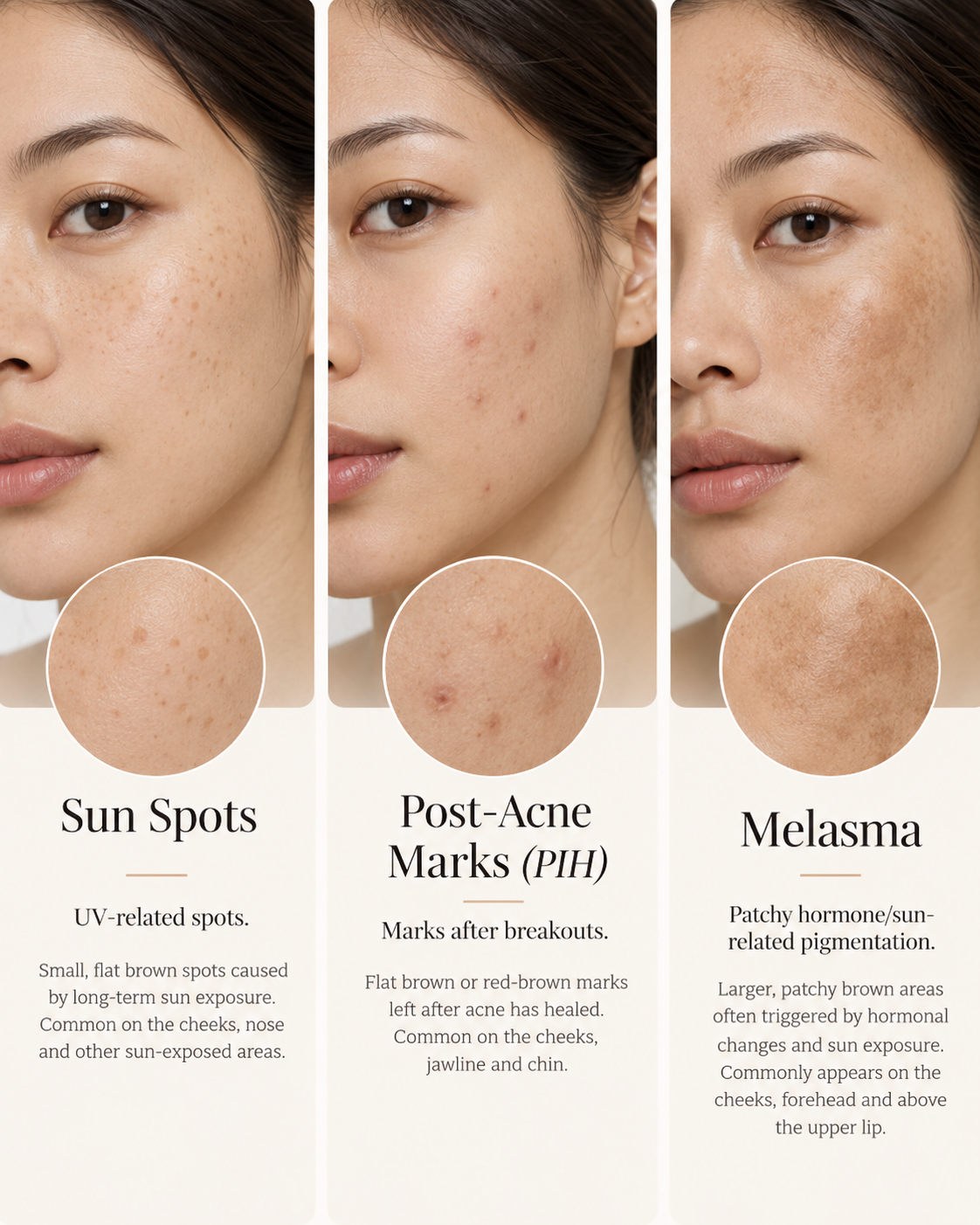
The three common types of facial pigmentation are sun spots, post-inflammatory hyperpigmentation (PIH) and melasma.
Pigmentation Comparison Chart
A. Sun Spots
Sun spots develop following prolonged exposure to ultraviolet (UV) radiation.
Common characteristics:
Usually appear as flat brown spots.
Often found on the cheeks, nose and forehead.
Become more common with cumulative sun exposure.
May darken with continued UV exposure.
B. Post-Inflammatory Hyperpigmentation (PIH)
PIH occurs when skin produces excess pigment following inflammation or injury.
Common triggers:
Acne breakouts.
Picking or squeezing pimples.
Skin irritation.
Over-exfoliation.
Inappropriate use of strong skincare products.
If you frequently experience breakouts, managing the underlying acne is an important part of preventing new marks.
Read more: Acne SOS: Tackling Facial, Chest and Back Acne Head-On.
C. Melasma
Melasma typically appears as larger, uneven brown or grey-brown patches across the face.
Common characteristics:
Frequently affects the cheeks, forehead and upper lip.
Often develops in a symmetrical pattern.
May be associated with hormonal changes.
Can worsen with sun exposure, visible light and heat.
Often requires long-term management.
Important: Melasma should be assessed by a dermatologist. Aggressive or unsuitable treatments may aggravate pigmentation rather than improve it.
3. What Causes Pigmentation in Singapore?
Singapore's tropical climate makes sun protection especially important for anyone managing pigmentation.
However, UV exposure is not the only contributing factor.
Six Common Pigmentation Triggers
1. UV Exposure
Stimulates melanin production.
Can darken existing pigmentation.
Contributes to sun spots and uneven skin tone.
2. Acne and Skin Inflammation
Breakouts may leave lingering brown marks.
Repeated inflammation can lead to new areas of pigmentation.
3. Hormonal Changes
May contribute to melasma.
Can be associated with pregnancy or hormonal medication.
4. Heat and Visible Light
May aggravate melasma in susceptible individuals.
Heat exposure can be a contributing factor even without direct sunlight.
5. Harsh Skincare Habits
Excessive exfoliation can irritate the skin.
Picking blemishes may increase the likelihood of post-acne marks.
6. Inconsistent Sun Protection
Allows pigmentation to become more noticeable.
May reduce the visible improvement achieved through skincare and facial treatments.
Key takeaway: Managing pigmentation involves both addressing existing discolouration and reducing the triggers that cause new marks to develop.
4. Why Does Pigmentation Take So Long to Fade?
Unlike surface dryness or temporary congestion, hyperpigmentation can take weeks or months to visibly improve.
Several factors influence how quickly marks fade:
The type and severity of pigmentation.
How deeply the pigment is distributed within the skin.
Individual skin tone and sensitivity.
Frequency of UV exposure.
Current skincare habits.
Whether inflammation or acne is still occurring.
Consistency of treatment and home care.
Why Aggressive Treatment Is Not Always Better
Trying to accelerate pigmentation improvement through excessive exfoliation or strong active ingredients can be counterproductive.
It may cause:
Skin irritation.
Increased sensitivity.
Barrier disruption.
Additional inflammation.
More noticeable post-inflammatory pigmentation.
A carefully paced approach is especially important for sensitive or pigmentation-prone skin.
5. What Pigmentation Treatments Are Available in Singapore?
The most suitable pigmentation treatment depends on the type of pigmentation, skin condition and individual needs.
At Amber Beila, facial care focuses on personalised treatment selection, skin maintenance and supporting a healthy-looking complexion.
A. Brightening Facial Treatments
Brightening facial treatments aim to improve the appearance of dullness and uneven skin tone.
Depending on the treatment selected, they may incorporate:
Gentle exfoliation.
Hydrating ingredients.
Brightening skincare formulations.
Skin-conditioning steps.
Soothing masks.
Suitable for: Individuals concerned about dull-looking skin, uneven tone or the appearance of superficial post-acne discolouration.
B. Aqua Peel Facial
An Aqua Peel Facial focuses on cleansing, exfoliation and removing surface impurities.
Potential benefits include:
Removing accumulated surface debris.
Helping improve the appearance of congested pores.
Supporting smoother-looking skin.
Preparing the skin for subsequent skincare steps.
Aqua Peel is not a direct treatment for every form of pigmentation. However, it may form part of a broader facial care plan where congestion and skin texture are additional concerns.
Read more: Discover Aqua Peel Facial.
C. Photo Rejuvenation
Photo rejuvenation may be considered for certain pigmentation and uneven-tone concerns following a suitability assessment.
Important considerations include:
Pigmentation type.
Individual skin tone.
Skin sensitivity.
Recent sun exposure.
Previous treatments.
Potential risks and treatment limitations.
Not every pigmentation concern is suitable for light-based procedures.
Melasma, in particular, requires extra caution and may be better managed under dermatological guidance.
D. Hydrating and Calming Facials
For individuals experiencing dryness, sensitivity or an impaired skin barrier, hydration and gentle care may be prioritised before introducing more intensive brightening products.
These treatments focus on:
Improving skin hydration.
Supporting skin barrier function.
Reducing the appearance of temporary dryness.
Maintaining skin comfort.
Preparing the skin for a suitable ongoing care routine.
A personalised facial consultation can help determine which approach is appropriate.
6. What Should Your Daily Pigmentation Skincare Routine Include?
Professional facial care is only one part of maintaining an even-looking complexion.
Your daily skincare habits also influence how well visible improvements are maintained.
Morning Skincare Routine
Cleanse with a gentle facial cleanser.
Apply suitable skincare products for your concerns.
Moisturise to support skin hydration.
Finish with broad-spectrum SPF 30 or higher sunscreen.
Additional sunscreen tips:
Apply sunscreen generously.
Reapply approximately every two hours when outdoors, and after swimming or excessive sweating.
Use physical sun protection such as hats and shade.
Consider a suitable tinted sunscreen containing iron oxides if you have melasma, as visible light can aggravate it.
Evening Skincare Routine
Remove makeup and sunscreen thoroughly.
Cleanse without excessive scrubbing.
Apply suitable brightening products, if recommended.
Follow with moisturiser.
Avoid:
Picking or squeezing blemishes.
Using multiple exfoliating products simultaneously.
Applying strong active ingredients to irritated skin.
Changing skincare products too frequently.
Consistency matters more than an overly complicated routine.
7. Why Is a Skin Consultation Important Before Pigmentation Treatment?
Different pigmentation concerns can appear similar but require different approaches.
A consultation helps identify suitable salon care and whether a medical assessment should be recommended first.
What Will Your Therapist Assess?
At Amber Beila, a facial consultation may consider:
Your main skin concerns.
Visible skin tone and pigmentation patterns.
Skin sensitivity and current condition.
History of acne or irritation.
Current skincare products.
Previous facial treatments.
Sun exposure and lifestyle habits.
Desired treatment outcomes.
Why Personalised Treatment Matters
Not every client requires the same facial steps or treatment intensity.
A personalised approach helps to:
Select appropriate facial treatments.
Avoid unnecessary skin irritation.
Prioritise skin hydration when needed.
Establish realistic expectations.
Recommend a manageable home care routine.
If your pigmentation appears suspicious or requires medical diagnosis, consult a dermatologist before proceeding with cosmetic treatments.
8. What Does Real Pigmentation Treatment Progress Look Like?
Pigmentation improvement is gradual, and visible changes differ between individuals.
Rather than expecting immediate clearance, look for improvements in overall skin condition and the appearance of uneven tone.
Stage 1: Improving Overall Skin Condition
Early changes may include:
Skin feels more hydrated.
Surface texture appears smoother.
Reduced appearance of congestion.
Makeup applies more evenly.
These improvements do not necessarily mean the underlying pigmentation has faded.
Stage 2: Gradual Improvement in Skin Appearance
Depending on the pigmentation type and treatment approach, you may begin noticing:
Some existing marks appear less prominent.
Overall skin tone looks more balanced.
Areas of dullness become less noticeable.
Skin appears clearer and healthier.
Stage 3: Maintaining Visible Progress
Long-term care focuses on:
Consistent sunscreen application.
Preventing new acne-related marks.
Maintaining a suitable skincare routine.
Avoiding unnecessary skin irritation.
Reviewing treatment suitability when skin needs change.
Remember: Pigmentation improvement is not always linear. Hormones, new breakouts and sun exposure can continue to influence its appearance.
9. How Can You Prevent Pigmentation From Getting Worse?
While not all pigmentation is preventable, several everyday habits can help reduce avoidable triggers.
Pigmentation Prevention Checklist
Apply broad-spectrum sunscreen daily.
Reapply sunscreen when necessary.
Avoid excessive direct sun exposure.
Treat acne early and avoid picking blemishes.
Maintain a gentle skincare routine.
Avoid over-exfoliating.
Use skincare suitable for your skin type.
Seek professional advice for persistent pigmentation.
For ongoing concerns, a consistent approach is generally more sustainable than frequently switching treatments.
10. When Should You See a Dermatologist?
Not every dark spot is harmless pigmentation.
Seek medical assessment if you notice:
A spot changing rapidly in size, colour or shape.
Irregular or changing borders.
A mark that bleeds, crusts or does not heal.
Sudden or unexplained discolouration.
Persistent itching or pain.
Pigmentation that requires diagnosis or prescription treatment.
A dermatologist can help determine whether a mark is melasma, another pigmentation condition or a lesion requiring further investigation.
Important: Beauty salon facial treatments do not replace medical diagnosis or dermatological treatment.
Start Your Skin Journey With Amber Beila
Different skin concerns. Different needs. A personalised approach.
Managing pigmentation is not about chasing overnight results. It is about understanding your skin, selecting suitable treatments and maintaining good skincare habits.
At Amber Beila, our approach focuses on personalised facial care, realistic expectations and honest advice.
Whether you are concerned about dullness, visible post-acne marks or uneven-looking skin tone, begin with a consultation to explore suitable options for your skin.
Book Your Skin Consultation Today
The Heeren | Delfi Orchard | One Raffles Place | Beauty World
Individual experiences and visible results may vary. Consultation and treatment suitability apply.