
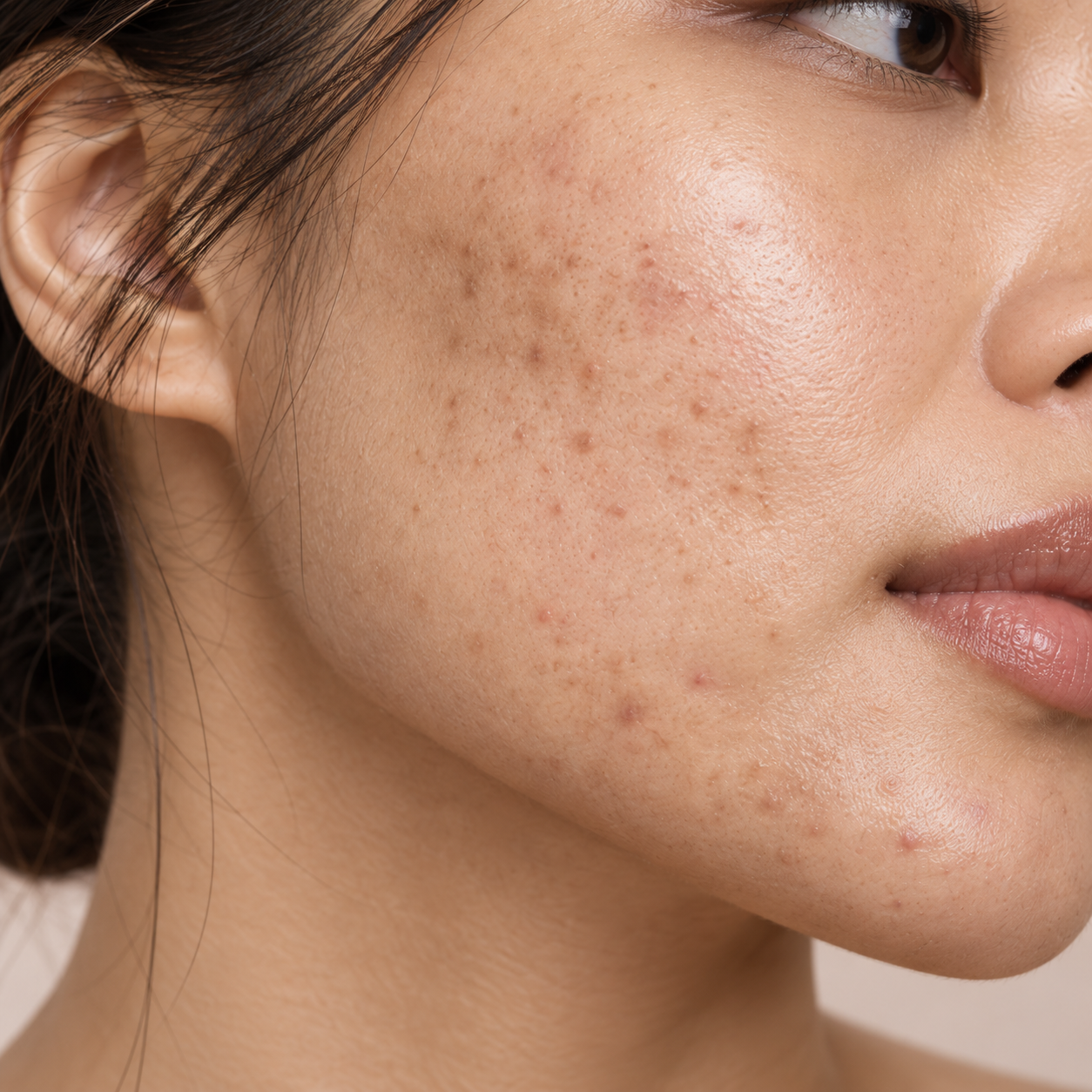
Acne scars and hyperpigmentation are different problems that need different treatments. Start by calming active breakouts, protect skin daily with sunscreen, introduce active ingredients one at a time, and consult a professional if marks or texture haven't improved after a few months of consistent care.
Acne Scars vs. Hyperpigmentation: What's the Difference?
Not every mark left behind by a breakout is the same — and treating the wrong one won't get results.
Acne scars are textural changes:
Shallow depressions, narrow pits, or rolling indentations
Sometimes raised rather than sunken
Caused by inflammation damaging collagen during healing
Topical skincare can improve appearance, but deeper scars usually need professional treatment
Hyperpigmentation is a colour change, not a texture change:
Flat brown, gray, red, or purple marks where a blemish used to be
Medically known as post-inflammatory hyperpigmentation (PIH)
Caused by inflammation triggering excess pigment production
Singapore's sun exposure can make marks darker and slower to fade
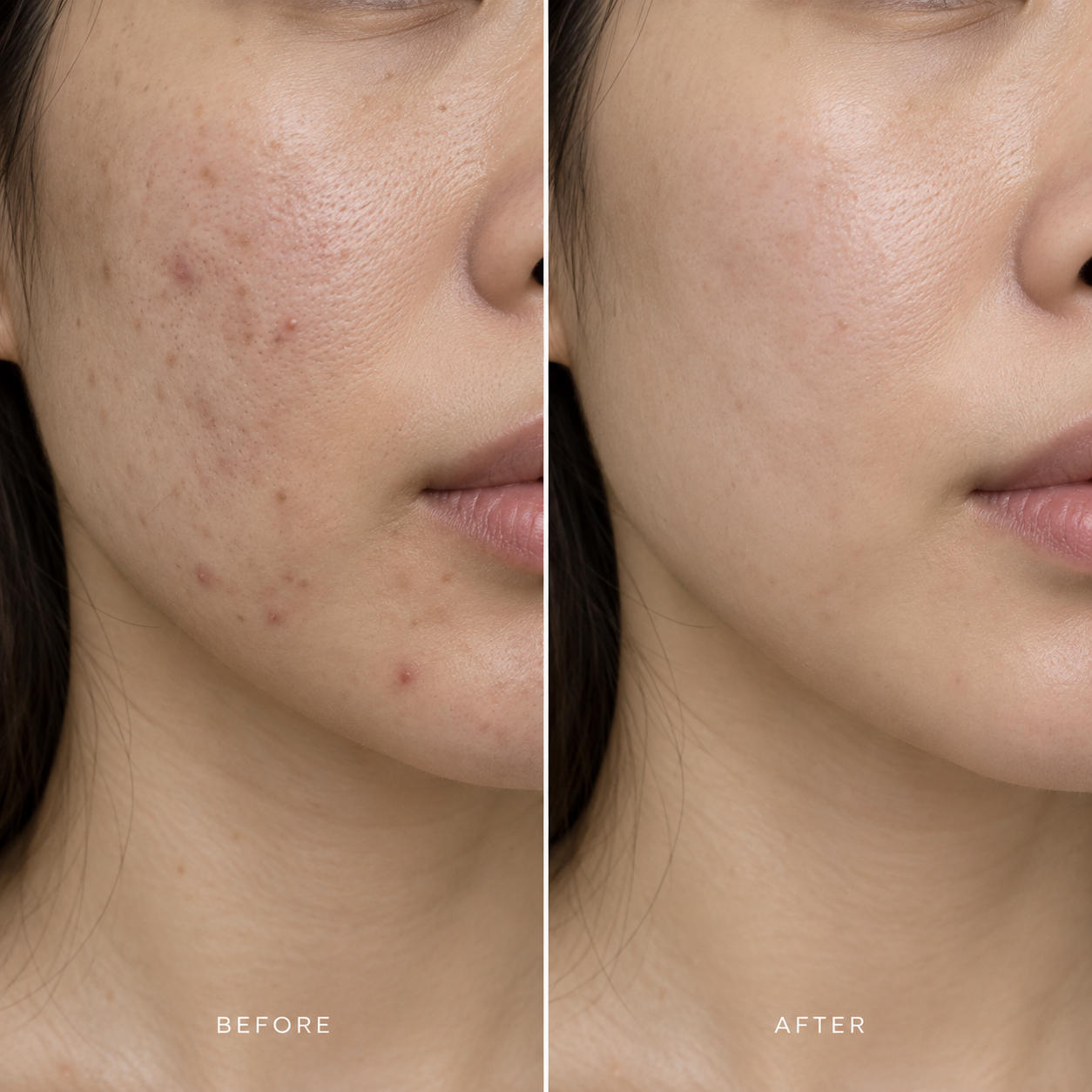
It's common to have both — a single pimple can leave an indentation and a dark mark, which is why generic, one-size-fits-all products often disappoint.
Step 1: Calm Active Acne First
Treating scars while new breakouts keep forming is like sanding a surface that's still being scratched.
Address ongoing triggers before focusing on marks or texture
If breakouts extend to the back or chest, treat those areas too — untreated congestion elsewhere can prolong inflammation
Never pick, squeeze, or repeatedly touch blemishes — pressure pushes inflammation deeper, increasing the risk of both pigmentation and permanent scarring
Step 2: Build a Non-Negotiable Daily Foundation
Cleanse without stripping the skin
Moisturize to support the barrier
Apply broad-spectrum sunscreen every single morning — non-negotiable when treating discoloration
Reapply during extended outdoor time or heavy perspiration
Choose a lightweight sunscreen you'll actually wear daily under makeup — consistency beats a "better" formula left unused on the shelf
Even brief, incidental sun exposure (commuting, sitting near a window, lunch outdoors) can prolong dark marks.
Step 3: Introduce Actives Slowly — Not All at Once
Reaching for every acid, scrub, serum, and retinoid at once tends to backfire.
Why it backfires:
Overloading actives compromises the skin barrier
Leads to stinging, dryness, and more inflammation
Can actually worsen pigmentation
Do this instead:
Start with a gentle cleanser, hydrating moisturizer, and daily SPF
Once skin is stable, add one treatment product
Wait several weeks before introducing anything else
Mild dryness is normal; persistent burning, peeling, or itching means pause and reassess
Ingredients worth discussing with a professional, depending on your specific concern:
Vitamin C — brightening, antioxidant support
Azelaic acid — pigmentation and mild acne
Niacinamide — barrier support, redness
Retinoids — texture, cell turnover
Exfoliating acids — selected by skin tolerance
Avoid physical scrubs, harsh brushes, and frequent DIY peels — they can feel smoothing short-term while aggravating sensitivity underneath.
Step 4: Know When to See a Professional
Consider professional treatment if you have:
Pigmentation that hasn't budged after months of consistent home care
Recurring congestion
Rough or uneven texture
Acne scarring with no visible improvement
A proper consultation should cover:
Skin and acne history
Current routine and sensitivity level
Pregnancy, breastfeeding, or medication use
Existing conditions: eczema, melasma, keloid scarring history
Treatment options depending on concern:
Photo rejuvenation — certain pigment concerns
Acne-focused facials — congestion and clearer-looking skin
Dermatologist referral — deep or complex scarring requiring medical procedures
What Results to Realistically Expect
Pigmentation tends to even out gradually with consistent daily SPF
Scarring takes longer — skin needs time to remodel collagen
Results vary by scar type, skin tone, active acne status, genetics, and aftercare consistency
Red flag: any provider promising to "erase" scars completely or pressuring a package before assessing your skin
Supporting Results Between Appointments
Keep pillowcases and makeup tools clean
Remove makeup gently
Avoid switching products every few days
Cleanse after commuting or exercising — but don't over-cleanse
Track when and where breakouts occur, plus what products were in use — this makes consultations far more productive
Seek medical advice early if acne is painful, widespread, worsening quickly, or scarring fast